Blackheads Scars: Prevention and Treatment Guide 2026
Blackheads scars represent one of the most frustrating skincare concerns, as they serve as permanent reminders of temporary blemishes. While blackheads themselves are a common form of non-inflammatory acne affecting millions of people worldwide, the scarring that can result from improper handling or chronic inflammation creates lasting cosmetic challenges. Understanding how these scars develop and implementing effective prevention strategies can make the difference between temporary skin concerns and permanent marks that require intensive intervention.
Understanding the Connection Between Blackheads and Scarring
The relationship between blackheads and scarring is more complex than many people realize. Blackheads, or open comedones, form when pores become clogged with sebum, dead skin cells, and bacteria. The distinctive dark appearance results from oxidation rather than dirt, a common misconception that leads to aggressive scrubbing and damage.
Scarring typically occurs through three primary mechanisms:
- Aggressive extraction techniques that tear surrounding tissue
- Secondary infection when bacteria penetrate deeper skin layers
- Chronic inflammation from untreated or repeatedly irritated comedones
When blackheads are improperly squeezed or picked, the pressure can rupture the follicle wall beneath the skin's surface. This rupture releases inflammatory material into the surrounding dermis, triggering a wound-healing response that may produce excess collagen or create depressed areas where tissue loss has occurred.
The Anatomy of Blackheads Scars Formation
Not all blackheads lead to scarring, but certain conditions increase the likelihood significantly. The depth of the comedone plays a crucial role, with deeper blackheads penetrating further into the dermis where scarring potential increases. Additionally, individual skin types respond differently to inflammation, with some people producing excessive scar tissue (hypertrophic or keloid scars) while others experience tissue loss (atrophic scars).
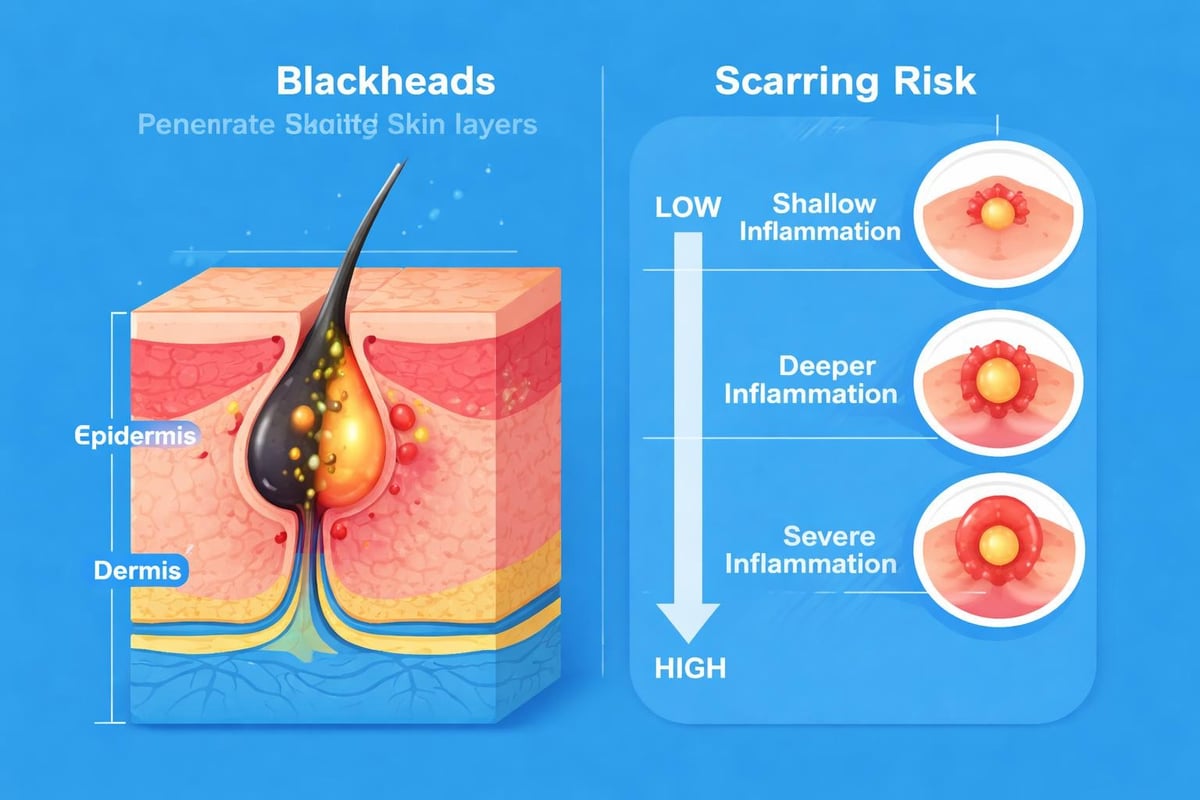
The inflammatory cascade following blackhead irritation involves multiple cellular processes. When the follicle wall breaks, immune cells rush to the area, releasing enzymes and inflammatory mediators. This response, while protective against infection, can inadvertently damage surrounding healthy tissue, creating the foundation for permanent scarring.
| Scar Type | Characteristics | Common Causes |
|---|---|---|
| Ice Pick | Deep, narrow pits | Deep blackhead extraction |
| Rolling | Wave-like indentations | Chronic inflammation |
| Boxcar | Wider, angular depressions | Tissue loss from infection |
| Hypertrophic | Raised, thickened tissue | Excess collagen production |
Prevention Strategies for Blackheads Scars
The most effective approach to managing blackheads scars involves preventing their formation entirely. This requires a comprehensive strategy that addresses both the initial blackhead development and the behaviors that lead to scarring. Professional acne treatment protocols emphasize gentle, consistent care rather than aggressive intervention.
Proper cleansing techniques form the foundation of prevention. Using lukewarm water and gentle, pH-balanced cleansers twice daily removes excess sebum without stripping the skin's protective barrier. Harsh scrubbing or abrasive tools can create micro-tears that increase inflammation and scarring risk.
Chemical Exfoliation vs. Physical Extraction
Modern skincare science strongly favors chemical exfoliation over physical extraction for managing blackheads. Salicylic acid, a beta-hydroxy acid (BHA), penetrates oil-filled pores to dissolve the debris that forms blackheads. This approach gradually clears pores without the tissue trauma associated with manual extraction.
For those seeking professional skincare solutions, formulations containing natural antibacterial compounds offer effective alternatives to harsh synthetic ingredients. Manuka oil, extracted from New Zealand's native Leptospermum scoparium, contains triketones that demonstrate potent antimicrobial properties while supporting the skin's natural healing processes.
The systematic approach to prevention includes:
- Cleanse with gentle, non-comedogenic products morning and evening
- Exfoliate chemically 2-3 times weekly to prevent pore congestion
- Treat active blackheads with targeted ingredients rather than extraction
- Moisturize to maintain skin barrier integrity and prevent overproduction of sebum
- Protect with non-comedogenic sunscreen to prevent post-inflammatory hyperpigmentation
Professional Treatment Options for Existing Blackheads Scars
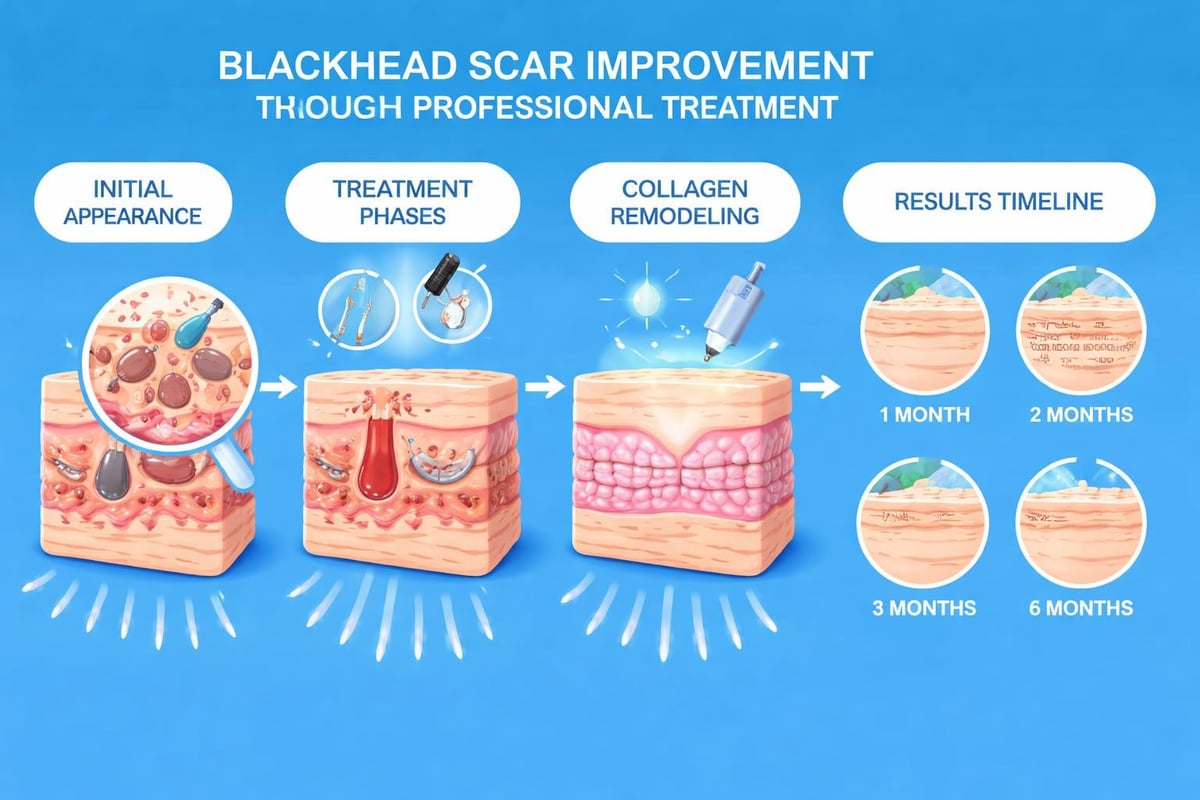
When blackheads scars have already formed, various professional treatments can improve their appearance, though complete elimination may not always be possible. The choice of treatment depends on scar type, severity, skin type, and individual healing characteristics. Understanding the connection between acne development and scarring helps inform treatment decisions.
Resurfacing Procedures
Laser resurfacing uses concentrated light energy to remove damaged outer skin layers and stimulate collagen production in deeper layers. Fractional lasers create microscopic treatment zones, leaving surrounding tissue intact to facilitate faster healing. This approach proves particularly effective for rolling and boxcar blackheads scars.
Chemical peels employ various acid concentrations to remove damaged skin layers systematically. Superficial peels using glycolic or lactic acid address mild scarring and hyperpigmentation, while medium-depth peels with trichloroacetic acid (TCA) penetrate further to remodel more significant scarring. Deep peels, though effective, require extended recovery periods and carry higher complication risks.
Microneedling creates controlled micro-injuries that trigger the skin's natural healing response, stimulating collagen and elastin production. When combined with topical growth factors or platelet-rich plasma (PRP), results can be enhanced significantly. Multiple sessions spaced four to six weeks apart typically yield optimal outcomes.
| Treatment | Best For | Sessions Needed | Recovery Time |
|---|---|---|---|
| Fractional Laser | Moderate to severe scars | 3-5 | 5-7 days |
| Chemical Peels | Mild to moderate scars | 4-6 | 3-7 days |
| Microneedling | All scar types | 4-6 | 1-3 days |
| Subcision | Deep, tethered scars | 1-3 | 3-5 days |
Injectable and Surgical Interventions
For deeper blackheads scars, dermal fillers provide immediate volume restoration by filling depressed areas. Hyaluronic acid fillers offer temporary results lasting six to eighteen months, while semi-permanent options like poly-L-lactic acid stimulate gradual collagen production for longer-lasting improvement. Strategic filler placement requires expertise to achieve natural-looking results.
Subcision addresses tethered scars by releasing the fibrous bands that pull down on the skin's surface. A specialized needle inserted parallel to the skin severs these attachments, allowing the depressed area to rise. Combining subcision with fillers or other resurfacing treatments often produces superior results compared to single-modality approaches.
At-Home Care and Maintenance Protocols
While professional treatments address existing blackheads scars, consistent at-home care maintains results and prevents new scar formation. Building an effective routine requires understanding active ingredients and their mechanisms of action. Research on acne management emphasizes the importance of sustained, appropriate skincare practices.
Retinoids accelerate cellular turnover, preventing pore congestion while stimulating collagen production to improve scar appearance over time. Starting with lower concentrations and gradually increasing strength minimizes irritation that could paradoxically worsen scarring. Prescription-strength tretinoin offers maximum efficacy, while over-the-counter retinol provides a gentler alternative.
Vitamin C serums deliver antioxidant protection while supporting collagen synthesis and inhibiting melanin production. This triple action addresses multiple aspects of blackheads scars, from structural improvement to pigmentation reduction. L-ascorbic acid formulations at 10-20% concentration demonstrate optimal effectiveness when properly stabilized and packaged.
The Role of Natural Botanical Ingredients
Modern formulations increasingly incorporate botanical ingredients with clinical evidence supporting their efficacy. Those dealing with adult acne concerns particularly benefit from natural antimicrobial and anti-inflammatory compounds that address both active breakouts and healing.
Palmarosa oil contains geraniol and geranyl acetate, compounds demonstrating antibacterial properties against acne-causing bacteria while promoting skin regeneration. When combined with triketone-rich Manuka oil, these ingredients create synergistic effects that address multiple factors in blackheads scars development and healing.
The comprehensive at-home protocol includes:
- Morning: Gentle cleanser, vitamin C serum, moisturizer with SPF 30+
- Evening: Double cleanse, treatment products (retinoid or AHA/BHA), hydrating moisturizer
- Weekly: Chemical exfoliant (2-3x), hydrating mask (1-2x)
Understanding Risk Factors and Individual Variations
Not everyone who develops blackheads will experience scarring, and understanding personal risk factors helps tailor prevention strategies. Genetics play a significant role, with family history of acne scarring indicating increased susceptibility. Skin type also influences outcomes, as individuals with darker skin tones face higher risks of post-inflammatory hyperpigmentation, while those with very fair skin may develop more visible atrophic scarring.
Behavioral factors significantly impact scarring likelihood. Picking, squeezing, or otherwise manipulating blackheads dramatically increases tissue damage and infection risk. Stress-induced breakouts create additional complications, as elevated cortisol levels can impair healing and prolong inflammatory responses.
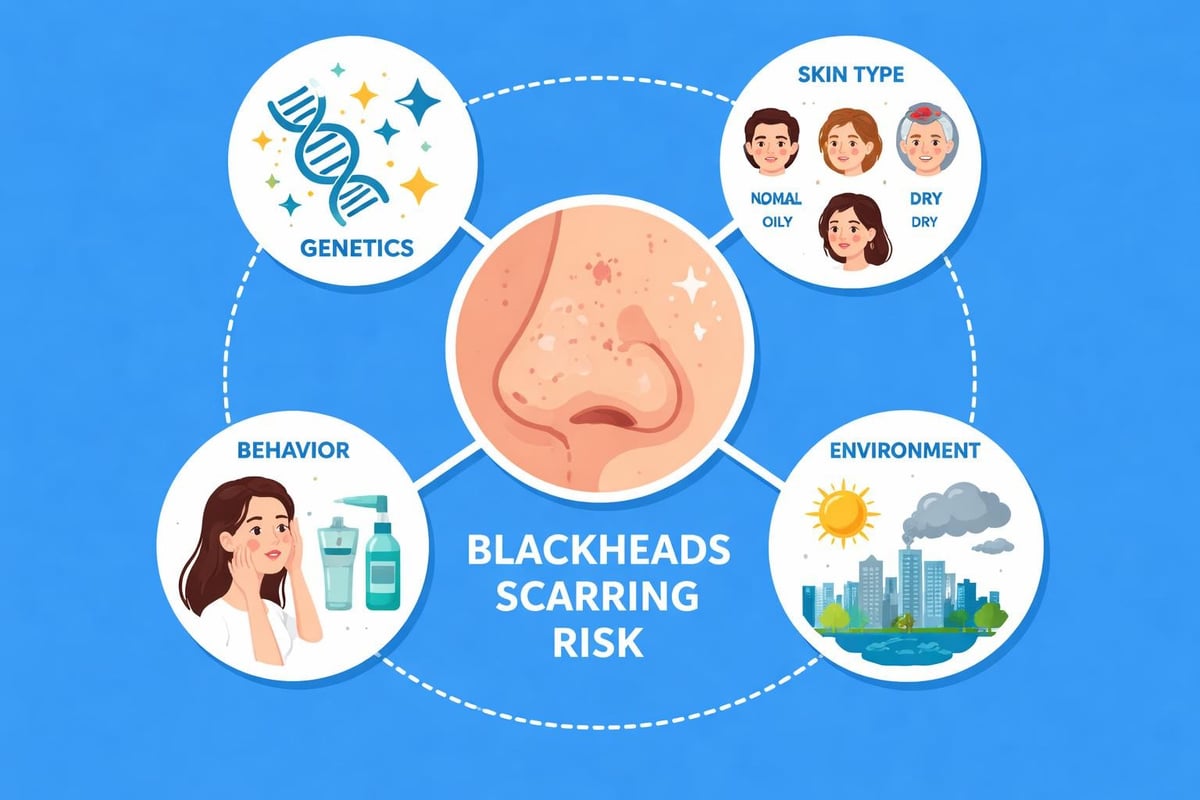
Environmental considerations include exposure to friction and pressure that can worsen blackheads. Acne mechanica, triggered by helmets, sports equipment, or tight clothing, creates conditions where blackheads develop under increased mechanical stress, potentially leading to deeper inflammation and scarring.
Hormonal Influences on Blackheads Scars Development
Hormonal fluctuations influence sebum production and skin healing capabilities, creating windows of increased vulnerability. Women may notice cyclical patterns where blackheads worsen during specific menstrual cycle phases, and improper management during these times can lead to scarring. Understanding these patterns enables proactive treatment intensification during high-risk periods.
Androgens stimulate sebaceous gland activity, increasing oil production that contributes to blackhead formation. Hormonal treatments, including certain oral contraceptives and anti-androgen medications, can reduce this stimulus, decreasing both blackhead development and subsequent scarring risk for appropriate candidates.
Advanced Combination Therapies and Emerging Treatments
The frontier of blackheads scars treatment involves combining multiple modalities to achieve superior results. Sequential treatments targeting different aspects of scarring create synergistic improvements that exceed what single interventions can accomplish. Research into comprehensive acne management continues revealing optimal treatment combinations.
Laser-assisted drug delivery represents an innovative approach where fractional laser creates microscopic channels that enhance topical product penetration. Applying growth factors, stem cell extracts, or other regenerative compounds immediately after laser treatment allows deeper delivery and potentially enhanced results. This technique bridges the gap between topical and procedural interventions.
Radiofrequency microneedling adds thermal energy to traditional microneedling's mechanical stimulation. The heat generated in deeper skin layers stimulates collagen remodeling while tightening existing fibers, addressing both scar texture and skin laxity. Controlled depth and energy delivery ensure safety across different skin types.
Platelet-rich fibrin matrix (PRFM) advances traditional PRP by creating a scaffold that sustains growth factor release over extended periods. When injected into scarred areas or applied during microneedling, PRFM may enhance tissue regeneration and remodeling compared to standard approaches.
| Combination Approach | Components | Advantages | Considerations |
|---|---|---|---|
| Laser + PRP | Fractional laser with platelet-rich plasma | Enhanced healing, improved collagen | Higher cost, multiple sessions |
| Subcision + Filler | Release of tethered scars plus volume | Immediate and long-term improvement | Requires skilled practitioner |
| Peel + Microneedling | Chemical resurfacing plus collagen induction | Addresses multiple scar characteristics | Extended recovery between sessions |
Lifestyle Factors Supporting Scar Prevention and Healing
Beyond topical treatments and professional procedures, lifestyle choices profoundly impact skin's ability to resist scarring and heal effectively. Nutrition provides the building blocks for collagen synthesis and immune function, while sleep facilitates cellular repair processes essential for preventing blackheads scars progression.
Protein intake supports collagen production, with amino acids like proline, glycine, and lysine serving as structural components. Vitamin C acts as a cofactor in collagen synthesis, while zinc supports immune function and wound healing. Omega-3 fatty acids modulate inflammation, potentially reducing the excessive inflammatory response that contributes to scarring.
Hydration maintains skin barrier function and supports cellular processes involved in healing. Adequate water intake helps flush toxins and supports optimal skin cell turnover. While individual needs vary, most adults benefit from consuming half their body weight in ounces of water daily as a baseline.
Sleep and Stress Management
Sleep deprivation impairs immune function and increases inflammatory markers, creating conditions that worsen both blackheads development and scarring potential. During deep sleep, growth hormone secretion peaks, facilitating tissue repair and regeneration. Prioritizing seven to nine hours of quality sleep supports the body's natural healing capabilities.
Chronic stress elevates cortisol levels, which can increase sebum production, impair skin barrier function, and slow healing processes. Implementing stress management techniques including meditation, exercise, or therapy addresses this often-overlooked factor in blackheads scars prevention. The connection between inner wellness and skin health continues gaining recognition in modern dermatology.
Timing Interventions for Optimal Outcomes
The timing of treatment interventions significantly impacts outcomes when addressing blackheads scars. Early intervention during the inflammatory phase can prevent scar formation, while established scars require different approaches based on their maturity. Understanding these temporal considerations optimizes treatment planning.
Active inflammation requires gentle management focused on reducing inflammatory responses without traumatizing tissue. Premature aggressive treatment can worsen outcomes, converting what might have been temporary marks into permanent scars. Anti-inflammatory ingredients and gentle care during this phase lay the foundation for optimal healing.
Newly formed scars, typically within the first year after formation, remain more responsive to intervention than mature scars. During this remodeling phase, collagen continues reorganizing, and targeted treatments can influence this process toward more favorable outcomes. Silicone-based products, for instance, demonstrate particular effectiveness when applied to new scars.
Mature blackheads scars require more intensive interventions, as the abnormal collagen architecture has stabilized. However, the skin's capacity for remodeling never completely disappears, meaning improvement remains possible even years after initial scar formation. Realistic expectations and patience prove essential when addressing long-standing scarring.
The seasonal timing of certain treatments matters as well. Procedures increasing photosensitivity, including chemical peels and laser treatments, are ideally performed during months with reduced sun exposure. This timing minimizes complications like post-inflammatory hyperpigmentation and allows adequate healing before increased UV exposure.
Preventing and treating blackheads scars requires a comprehensive approach combining proper skincare habits, professional interventions when necessary, and lifestyle factors supporting skin health. Understanding how these scars form empowers you to make informed decisions protecting your skin's future appearance. For those seeking potent, science-backed solutions rooted in natural ingredients, Rejencia offers a specialized blemish kit featuring Manuka oil with triketones and Palmarosa oil, providing the antimicrobial and healing support your skin needs to address blemishes while minimizing scarring risk. This targeted approach bridges the gap between aggressive chemical treatments and ineffective natural alternatives, offering professional-grade results through botanically-derived active compounds.